






















Navratri-9 Days Special: The Complete Deity, Colour & Prasad Guide
Navratri-9 Days Special is one of Hinduism’s most powerful and widely celebrated festivals. Spanning nine nights, it honours the many avatars of the Divine Feminine (Shakti) and culminates in Vijayadashami. While colours, food, and prayers are commonly observed, each day of the Navratri-9 Days Special carries deep spiritual, symbolic, and regional significance. This guide explains what to wear, what to offer, and the meaning behind each day.
What is the Significance of Navratri-9 Days Special?
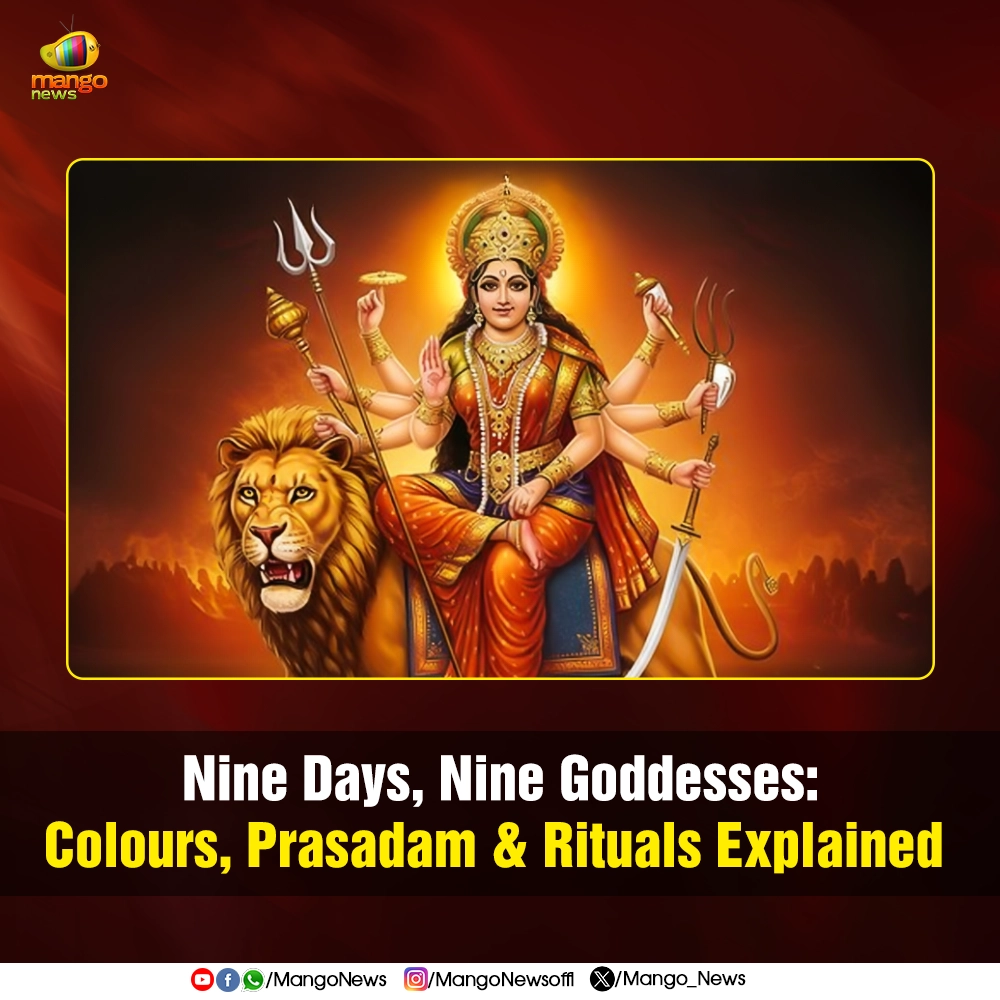
The term Navratri literally means “nine nights.” The Navratri-9 Days Special is dedicated to the worship of nine forms of Goddess Durga (Navadurga), each representing a unique aspect of Shakti—purity, courage, compassion, wisdom, and strength.
The festival also celebrates the victory of good over evil, such as the defeat of Mahishasura. Rituals like Ghatasthapana or Kalash Sthapana (installing a pot of water and invoking the Goddess), daily prayers, mantras, aarti, fasting, and prasad offerings are key components of the Navratri-9 Days Special.
The Nine Goddesses and Colours in Navratri-9 Days Special
Although the forms and colour sequences vary by region, the widely recognized goddesses are: Shailaputri, Brahmacharini, Chandraghanta, Kushmanda, Skandamata, Katyayani, Kalaratri, Mahagauri, and Siddhidatri.
Colours symbolize spiritual qualities:
-
White – purity, peace
-
Red – passion, strength, courage
-
Blue / Royal Blue – tranquility, richness
-
Yellow – joy, warmth
-
Green – growth, harmony
-
Grey – balance, humility
-
Orange – energy, enthusiasm
-
Peacock Green – uniqueness, compassion
-
Pink – affection, harmony
Prasad & Ritual Food in Navratri-9 Days Special
Food offerings (prasadam) are symbolic and sattvic. Sweet dishes like kheer or laddu signify prosperity and joy. Tamarind rice (pulihora) represents life’s challenges, while simple pulses or curd-based dishes aid digestion.
On days 8 and 9, special pujas like Kanya Puja (worship of young girls as embodiments of the Goddess) and Ayudha Puja (worship of tools, books, and instruments) are performed to honor knowledge, discipline, and work.
Additional Rituals & Cultural Practices
-
Ghatasthapana / Kalash Puja: Installed on Day 1 to invite the Goddess into the home.
-
Fasting & Vrata: Many observe partial or complete fasts, particularly on Durga Ashtami.
-
Kanya Puja: On Ashtami or Nava, nine young girls are worshipped as the nine forms of Durga.
-
Ayudha Puja / Saraswati Puja: Tools, books, and instruments are worshipped as instruments of divine power.
-
Regional Variations: The sequence of colours, deity names, and prasad differs by region. In North India, Shailaputri, Brahmacharini, etc., are more common, while South Indian observances may extend to 11 days.
The Navratri-9 Days Special is more than just rituals. It is a journey of spiritual growth. Each day encourages the cultivation of virtues like purity, courage, compassion, and wisdom. Colours, food, and deity worship together create a rich tapestry of devotion. Whether following the classical nine-day sequence or a regional 11-day observance, the essence remains: honouring the Goddess in her many forms, seeking blessings, and celebrating inner victory.