
























On 7th October, 2016, the Law Commission released a questionnaire asking the public to fill it out and send it back within 45 days, inviting opinions and views on the Uniform Civil Code. A Uniform Civil Code is the proposal to replace the personal laws based on scriptures and customs of each major religious community in India, with a common set governing every citizen. These laws are distinguished from public law covering marriage, divorce, inheritance, adoption and maintenance.
The All India Muslim Personal Law Board (AIMPLB), on Thursday, slammed the Law Commission in a press conference saying it would ban the questionnaire. “Uniform civil code is not acceptable for the people of this country,” Hazrat Maulana Wali Rehman of the Muslim Law Board, said. “We are staying in this country according to the Constitution of the country. The Constitution has guaranteed the right to live in our country to us,” he added.
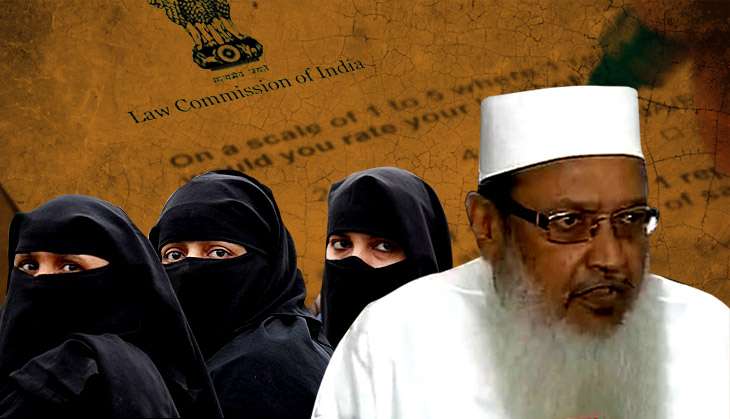
The AIMPLB has constantly opposed the implementation of the Uniform Civil Code and the abolishing of the practice of triple talaq. Earlier this week, another AIMPLB member Zafaryab Jilani claimed that “Ninety percent Muslim women support the Sharia Law.” The centre, however, filed an affidavit in the Supreme Court against triple talaq and polygamy in Islam, saying gender equality is non-negotiable.
Talking to FirstPost, Zakia Soman, one of the co-founders of Bharatiya Muslim Mahila Andolan, rubbished the claims of the AIMPLB. “The important question should be about gender justice. We’re talking about the rights given to Muslim women by the Quran and the Constitution, that have been denied ever since Indian independence.” She also said that the practice of triple talaq, “which is not Quranic”, was causing suffering among Muslim women.
Soman commended the Law Commission for this correct step, saying that it didn’t limit itself to Muslim personal laws. She said that laws pertaining to property rights for Hindu women and the Christian women’s right to equality on the two-year waiting period for finalising divorces also found mention. “This is a welcome move,” she said.