
























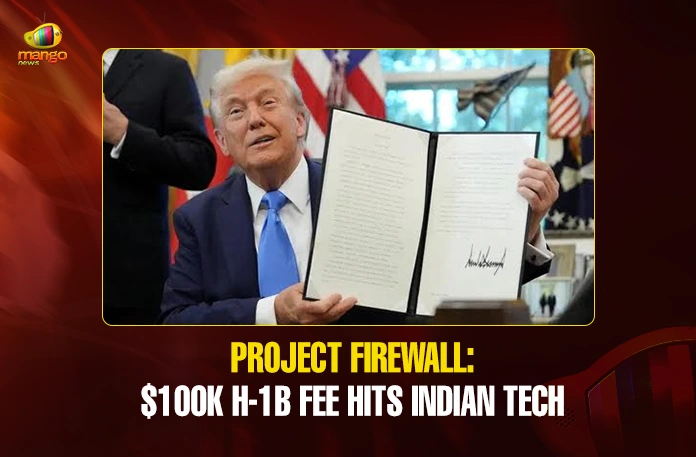
The Trump administration has rolled out Project Firewall, a sweeping immigration reform that is set to dramatically reshape the future of foreign workers in the United States. At the heart of this move is a steep hike in visa costs, most notably the $100k H-1B Visa Fee that employers must now pay for every petition. This measure signals one of the toughest crackdowns on skilled immigration in recent years.
What is Project Firewall?
To begin with, Project Firewall aims to tighten oversight on foreign work visas. Under this plan, the government has replaced lower filing charges with the $100k H-1B Visa Fee. The administration insists this approach will safeguard American jobs while strengthening national security. In short, officials are positioning the policy as a cornerstone of their “America First” agenda.
Who will be most affected?
The immediate burden will fall on Indian professionals, who make up the largest share of H-1B visa holders. Consequently, they are expected to face the steepest hurdles as the new rules take effect. At the same time, U.S. tech companies that depend heavily on global talent — particularly in IT and software — will see costs soar. Furthermore, smaller firms are likely to feel the pinch even more, as the fee could make it financially impossible to hire skilled workers from abroad.
What does this mean for workers?
As a direct result of the changes, Indian and other foreign employees outside the U.S. are now rushing to return before enforcement begins. Moreover, work permits tied to H-1B renewals will likely encounter delays, tougher scrutiny, and in some cases, outright rejection. Meanwhile, tech giants such as Microsoft and Amazon have reportedly issued urgent internal advisories, warning their employees to prepare for tighter visa restrictions.
Wider concerns
However, critics argue that Project Firewall could weaken America’s competitive edge in the global tech race. Since high costs may discourage firms from hiring foreign talent, many companies could shift projects overseas or expand operations elsewhere. Additionally, legal experts predict that the steep fee will trigger courtroom battles, creating prolonged uncertainty for both employers and employees.
Bottom line
In conclusion, with Project Firewall and its $100k H-1B Visa Fee, the U.S. has taken one of its boldest steps yet in restricting foreign work visas. The decision not only threatens the prospects of Indian professionals but also places a heavy burden on U.S. companies that thrive on global expertise. Moving forward, both workers and businesses must brace themselves for a more expensive, uncertain, and highly competitive U.S. job market.