

























India and US Ready for Historic Space Milestones in 2026
2026 is shaping up to be a landmark year in human space exploration as major missions from the Indian Space Research Organisation (ISRO) and NASA prepare to lift off. These missions promise to push the boundaries of science, technology, and international space ambitions like never before.
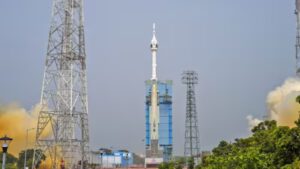
India’s Gaganyaan programme is gearing up for a key test flight early in 2026. The Gaganyaan-1 mission, an uncrewed orbital test scheduled around January–March, will launch a crew module carrying Vyommitra, a humanoid robot, into low Earth orbit. This flight will test and confirm critical systems, including life support, navigation, re-entry, and recovery operations, all of which must perform flawlessly before astronauts fly later in the decade. The series of uncrewed tests reflect India’s methodical efforts toward achieving independent human spaceflight capability.
Meanwhile, across the globe, NASA is advancing its Artemis II mission — slated for no later than April 2026 — which will send four astronauts on a historic journey looping around the Moon. This will be the first crewed lunar-flyby mission in more than 50 years, designed to test deep-space navigation, life-support systems, and spacecraft performance far beyond low Earth orbit. A successful mission will not only mark a triumphant return of humans to deep space but also lay the groundwork for future lunar landings and Mars-bound ambitions.
Together, these missions signal a new era of multipolar space exploration — where nations independently pursue human spaceflight while fostering partnerships and advancing global scientific progress. As Gaganyaan validates crewed space systems and Artemis II breaks new ground around the Moon, 2026 may well be remembered as a turning point in humanity’s journey among the stars.