







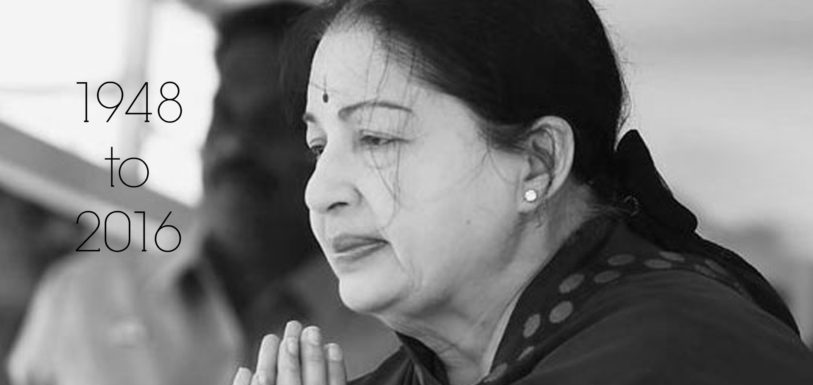
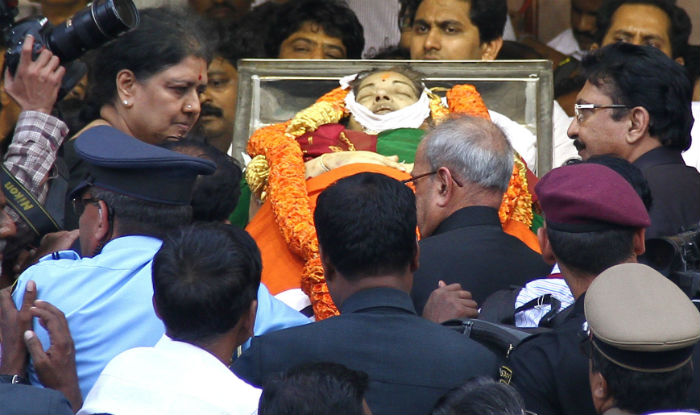
According to Hindu mythology, an atma (soul,) would not get moksha (Eternal Rest,) unless a direct kin performs the last rituals. Keeping this in mind J. Jayalalithaa’s relatives re-performed her last rites, on Tuesday, at Paschima Vahini on the banks of Cauvery river at Srirangapatna. Jayalalithaa was buried as per the Hindu custom according to which unmarried women are not cremated.
The Cheif priest of Srirangapatnam temple, Ranganath Iyengar performed the rites, by cremating a doll, in her place. To attain moksha, the relatives believe that her body should have been cremated. The following rituals will be observed for the next five days.
Varadaraju, Jayalalithaa’s step brother led these rituals. He expressed that her political party should have respected her belief’s. He said, “Had my sister been an atheist, she would not have visited temples, participated in Hindu festivals nor observed Hindu traditions. Why did her party take the decision to bury her? Why did they keep us away from her last rites.”
Many of her followers expressed doubts as to why her body was not cremated as per the Hindu customs. This doubt arose when relatives of Jayalalithaa expressed that she was a strict believer and follower of Hindu rituals and customs. And keeping in mind that she was an Iyengar many were upset about the rituals not happening in order with Iyengar customs. Jayalalithaa’s nephews, who are living in Mysuru and Melukote, also expressed disappointment.
Hindu mythology also states that unless the body attains ‘Kapala Moksha’, the atma will not attain moksha. This was the reason her relatives were upset and they reperformed the rites. Her cousins also joined Jayalalithaa’s step-brother Varadaraju in re-performing the last rites.