




















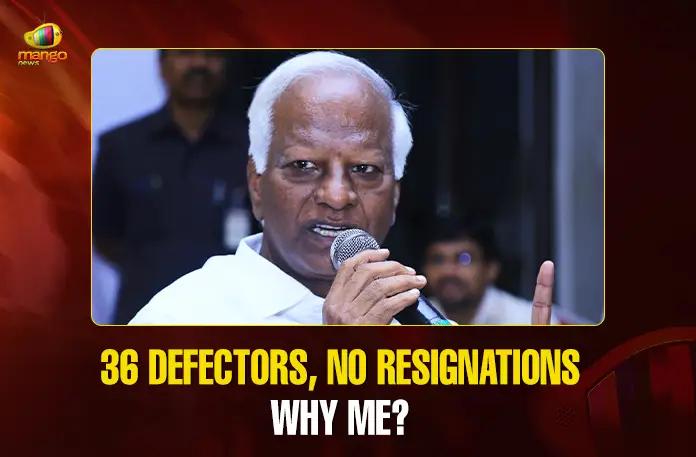
Telangana’s political arena has heated up with Station Ghanpur MLA Kadiyam Srihari openly challenging the BRS leadership over what he calls a “double standard” on defections. Responding to growing pressure for him to resign after moving to Congress, Srihari reminded that under K. Chandrashekar Rao’s (KCR) leadership, 36 MLAs from opposition parties defected to BRS between 2014 and 2023 — none of whom resigned their assembly seats.
Addressing reporters, Srihari pointed out that two defected MLAs even became ministers, yet party leaders neither sought their resignations nor filed disqualification petitions. “KCR welcomed them without asking for resignations, so why are leaders singling me out today?” he asked, emphasizing that applying rules selectively weakens the credibility of democratic processes.
Kadiyam Srihari revealed that he had received a notice from Speaker Gaddam Prasad Kumar, directing him to explain his position by September 30. He said such notices have never been the practice when defections benefited BRS. His remarks highlight the political irony in Telangana, where leaders once treated defections as a show of strength but now examine them under tighter norms.
At the same time, the MLA sought to assure his constituents that development remains his priority. He cited the Congress government’s sanction of over ₹1,000 crore for road networks, irrigation works, and power substations in Station Ghanpur, and he promised to continue all projects despite political distractions.
This debate is likely to intensify in the coming weeks as several defected legislators face disqualification proceedings. Analysts say the outcome could shape Telangana’s political landscape, testing both the constitutional boundaries of anti-defection law and the public’s tolerance for political turnarounds.
Why this matters:
It raises questions about consistency in applying anti-defection norms in Telangana politics.
Sets up a clash between legal procedure (disqualification or resignations) and political tradition or precedent.
Highlights the tension between party loyalty and constituency service in the eyes of voters.